
Worker accommodation: the next formal asset class
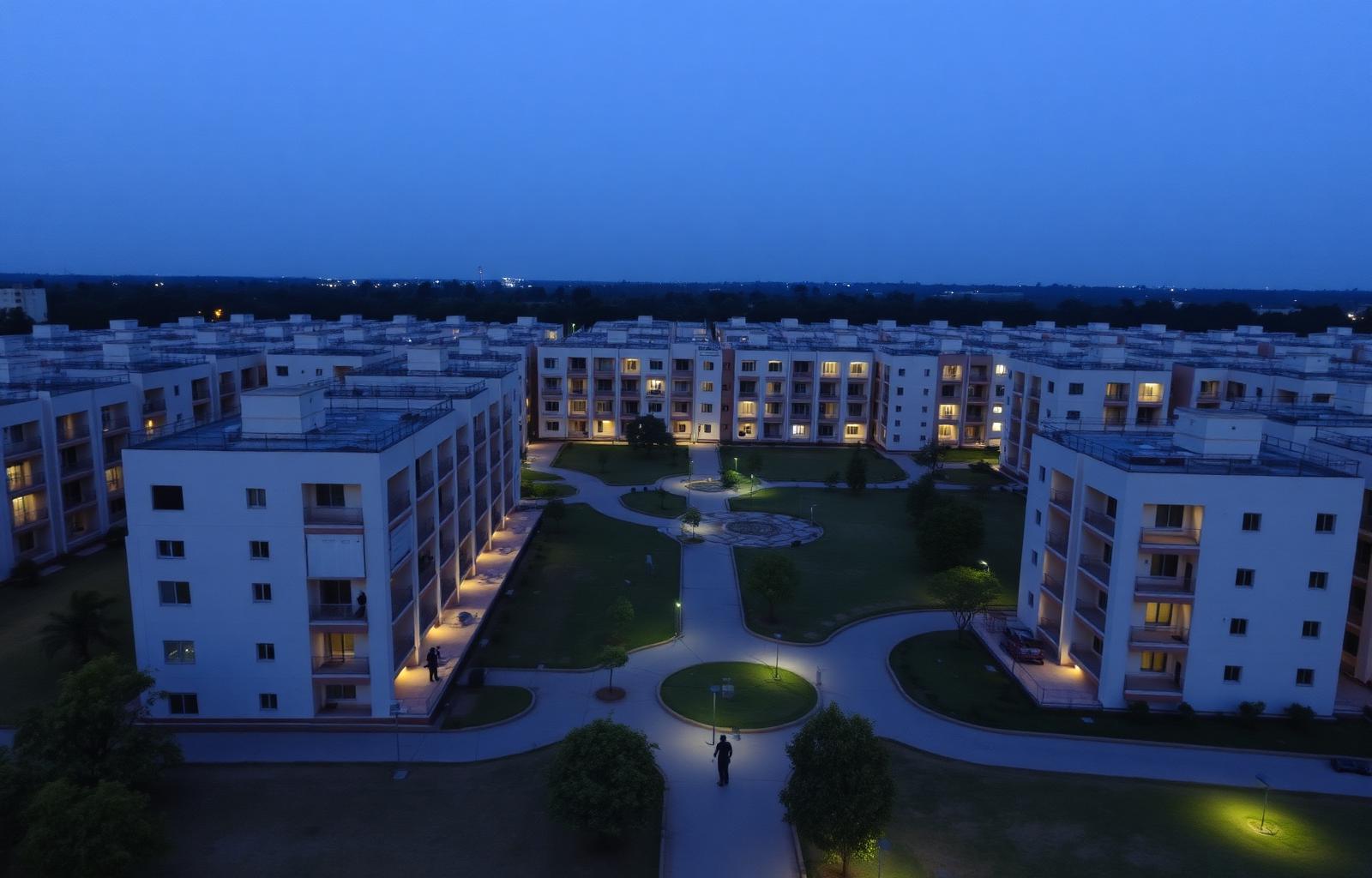
For decades, worker accommodation has been treated as a side function — an operational headache handled by contractors, factories, staffing firms, or local landlords. But that is rapidly changing.
Across India and emerging economies, organized worker accommodation is slowly evolving into something much bigger: a scalable, investable, income-generating infrastructure category.
In the coming decade, worker accommodation is likely to emerge as a formal real estate and infrastructure asset class — similar to how student housing, co-living, warehousing, and data centres evolved over the last 15 years.
The scale of the opportunity
India has one of the world's largest migrant and blue-collar workforces. Millions of workers move across states every year for jobs in manufacturing, logistics, warehousing, construction, retail, hospitality, facility management, industrial parks and e-commerce supply chains.
Yet most worker housing today remains unorganized, overcrowded, poorly managed, unsafe, non-compliant and operationally invisible. This creates a huge infrastructure gap.
The same economy that built Grade-A office spaces, premium warehouses, and modern retail parks still houses workers in fragmented dormitories and informal rentals. That mismatch is no longer sustainable.
Why investors are starting to notice
Institutional investors typically look for sectors with large demand, recurring income, long-term contracts, high occupancy, operational scalability, predictable cash flows and infrastructure-like stability. Worker accommodation checks many of these boxes.
Unlike traditional residential real estate, organized worker housing can generate monthly recurring revenue, long-duration corporate contracts, stable occupancy, cluster-based expansion opportunities, and ancillary revenue streams across food, transport, utilities and services.
As India's industrial economy grows, demand for organized accommodation will rise alongside it. This creates the foundation for an entirely new asset category.
Similar asset classes already exist
The evolution pattern is familiar. A decade ago, student accommodation was highly fragmented and informal — today, organized student housing operators attract institutional capital and private equity investments. Warehouses were once considered low-quality industrial sheds — today, Grade-A logistics parks are among the hottest real estate asset classes in India. Data centres were once niche infrastructure — now they are core digital infrastructure backed by global funds.
Worker accommodation is likely following a similar trajectory.
Why corporates will drive the shift
Large employers increasingly understand that accommodation quality directly impacts attrition, productivity, worker retention, attendance, safety, compliance, employer branding and ESG reporting.
Poor living conditions create hidden operational costs. When workers live in overcrowded or unsafe environments, companies face higher absenteeism, frequent worker turnover, recruitment instability, transportation inefficiencies, reputational risks and compliance exposure.
As labour-intensive sectors become more organized, accommodation will become part of workforce infrastructure strategy — not just a procurement line item.
The ESG and compliance push
Governments, global brands, and institutional clients are increasingly focused on worker welfare, ethical sourcing, supply chain transparency, health and safety standards, and ESG compliance. Global companies sourcing from India are under pressure to improve labour conditions across their supply chains.
Organized accommodation providers can help companies meet these expectations through standardized facilities, digital records, health and safety systems, occupancy tracking, worker grievance mechanisms and auditable compliance frameworks. This makes worker accommodation strategically important — not just operationally useful.
Technology will formalize the sector
Modern accommodation platforms can now provide digital bed allocation, attendance tracking, visitor management, food management, transportation coordination, incident reporting, utility monitoring, compliance dashboards and workforce analytics.
Over time, worker accommodation facilities may function similarly to managed industrial infrastructure. The operators who combine physical infrastructure with software and operational excellence will create defensible businesses.
The rise of blue-collar infrastructure
India is entering a phase where blue-collar infrastructure will become a major investment theme — worker accommodation, industrial transportation, skill-linked housing, workforce mobility systems, worker healthcare ecosystems and industrial townships.
As manufacturing and logistics scale under initiatives like Make in India, the supporting worker ecosystem will need to evolve rapidly. Accommodation is one of the largest missing pieces.
What this means for the future
Over the next decade, we are likely to see dedicated worker housing operators, institutional investment into labour housing platforms, REIT-style structures for worker accommodation assets, ESG-focused workforce infrastructure funds, corporate outsourcing of accommodation operations, smart labour housing campuses near industrial clusters, and standardized accommodation ratings and certifications.
The companies that build trust, operational capabilities, and scalable systems early will have a significant advantage.
Conclusion
Worker accommodation is no longer just about beds and buildings. It is becoming workforce infrastructure.
The same way office spaces evolved into commercial real estate assets and warehouses evolved into logistics infrastructure, worker accommodation is beginning its transition into a formal asset class.
The opportunity is massive — not only financially, but socially. Because improving worker living conditions is not just good ethics. It is good infrastructure.
Partner with us
Building or expanding in an industrial corridor?