
Why custom-built spaces for workers are the highest-leverage investment Indian industry can make
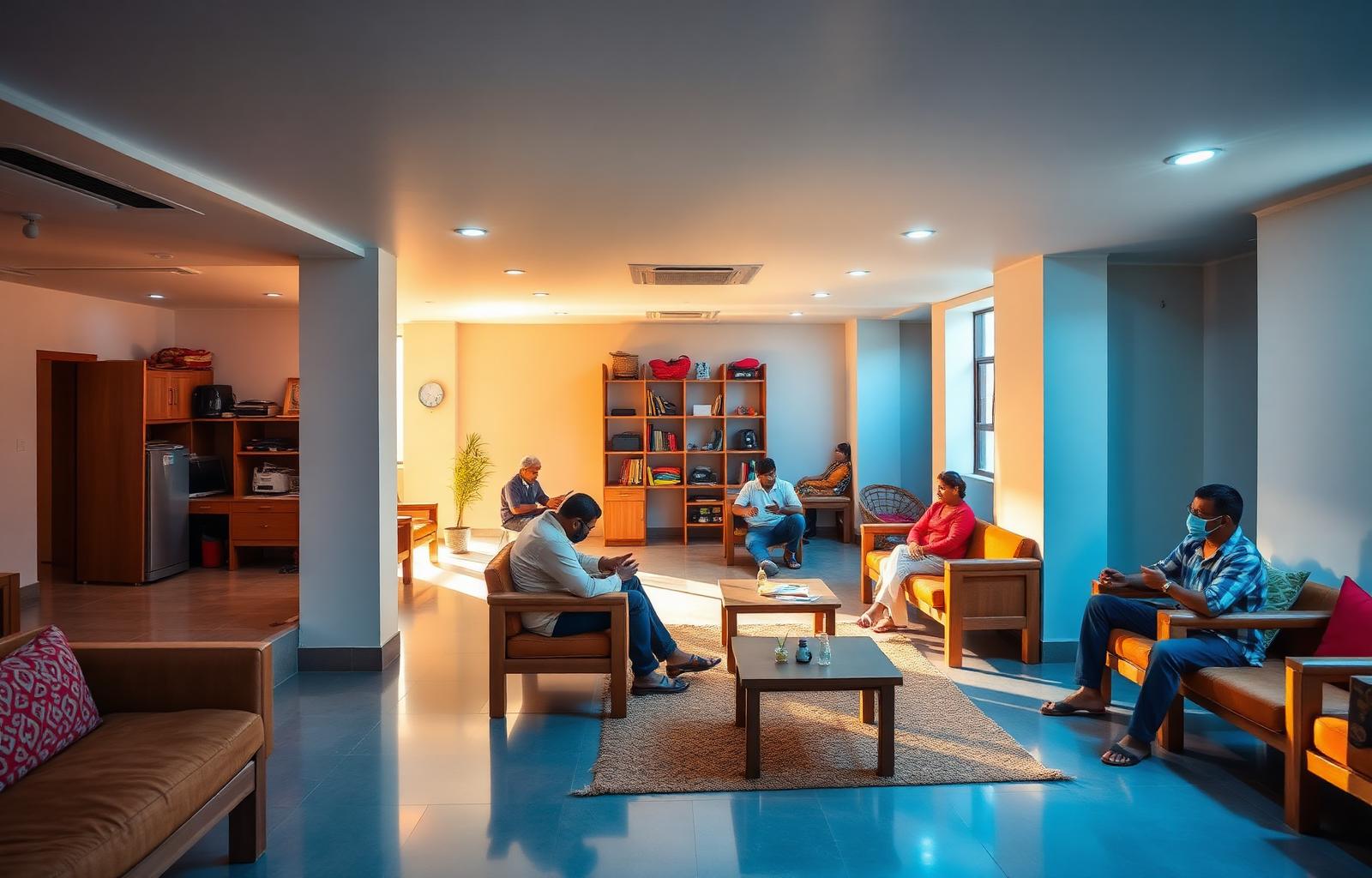
Walk into almost any industrial cluster in India today and you will find the same paradox. Inside the factory gates, processes are calibrated to the second — robotics, lean manufacturing, six-sigma quality. Step five hundred metres outside, and the same workforce that runs those lines lives in rented rooms with no ventilation, shared toilets for forty people, and a two-hour commute that begins at 4:30 a.m.
This is not just a humanitarian gap. It is a strategic one. And it is the single biggest reason that custom-built, purpose-designed worker accommodation is no longer a CSR line item — it is core industrial infrastructure.
Generic housing solves the wrong problem
Most worker accommodation in India today is whatever the local rental market happens to offer. It was not designed for shift workers. It was not designed for women on a manufacturing floor. It was not designed for the realities of summer in Sanand or monsoon in Chakan. It is shelter — nothing more.
Custom-built spaces start from a completely different brief: who is the worker, what shift do they run, what do they need to recover, eat, sleep, study, and call home? When the building is designed around those answers, every downstream metric improves.
What the data actually shows
Companies that have moved their workforce into purpose-built accommodation consistently report the same pattern: attendance rises by 15–25%, attrition drops by a third or more, and grievance incidents fall sharply within the first two quarters. For a 2,000-person facility, that is the difference between hitting and missing an annual production plan.
The cheapest housing in the market is almost always the most expensive thing you put your workforce into — you just pay for it in attrition, training and lost output instead of in rent.
Five things a custom-built campus gets right
Shift-aware layouts. A worker on a night shift needs blackout sleep zones, not a dormitory next to a 7 a.m. mess hall. Good design separates rest from activity, acoustically and visually.
Climate-tuned construction. Cross-ventilation, the right wall assembly, and shaded circulation can drop indoor temperatures by 4–6°C without active cooling. In an Indian summer, that is the difference between rest and heat stress.
Hygiene at scale. Kitchens and washrooms designed for hundreds of users have completely different requirements from a converted apartment block. Getting this right is what prevents the outbreaks and absenteeism spikes that quietly cost factories crores every year.
Dignity in shared spaces. Lockers that actually lock. Wifi lounges where workers can video-call their children. Wellness rooms staffed by a nurse. These are not amenities — they are retention tools.
Operations as a discipline. A building is only as good as how it is run. On-site management, transparent grievance redressal, and 24/7 security turn a campus into a place workers choose to stay.
Why this is also an investment thesis
From a capital perspective, purpose-built worker accommodation has the characteristics that institutional investors look for: a structural demand tailwind (India's manufacturing decade), long-tenure anchor tenants (the employers themselves), and operating leverage that improves with scale. That is why we believe worker housing will, over the next decade, become a recognised institutional asset class in India — alongside warehousing, data centres and student housing.
But the asset only works if the product works. And the product only works when it is custom-built for the people who live in it.
Where Nile fits in
At Nile Asset Management, we partner with manufacturers, EPC firms and logistics operators to design, finance and operate worker accommodation around their specific workforce — and with investors and landlords to underwrite those assets for the long term. Every building we put up is custom to the cluster, the employer, and the worker. That is the only way the math — human and financial — actually works.
If you are building a new facility, expanding an existing one, or sitting on land in an industrial corridor, we would love to talk.
Partner with us
Building or expanding in an industrial corridor?